+381 63 371 419


Products12 min read
Exinda 12 kW R290 heat pump: which Serbian homes it fits
TL;DR
The short answer
The Exinda 12 kW heat pump suits Serbian homes of typically 140 to 180 m² when insulation and emitters such as underfloor heating support it. It is an R290, DC inverter, monoblock unit that sits between the 9 kW and 15 kW models in the Exinda residential range. CENTRO-GAS, a Novi Sad industrial energy company and the exclusive EXINDA distributor in Serbia, confirms the final size in a house-specific sizing consultation, because floor area alone cannot settle it.
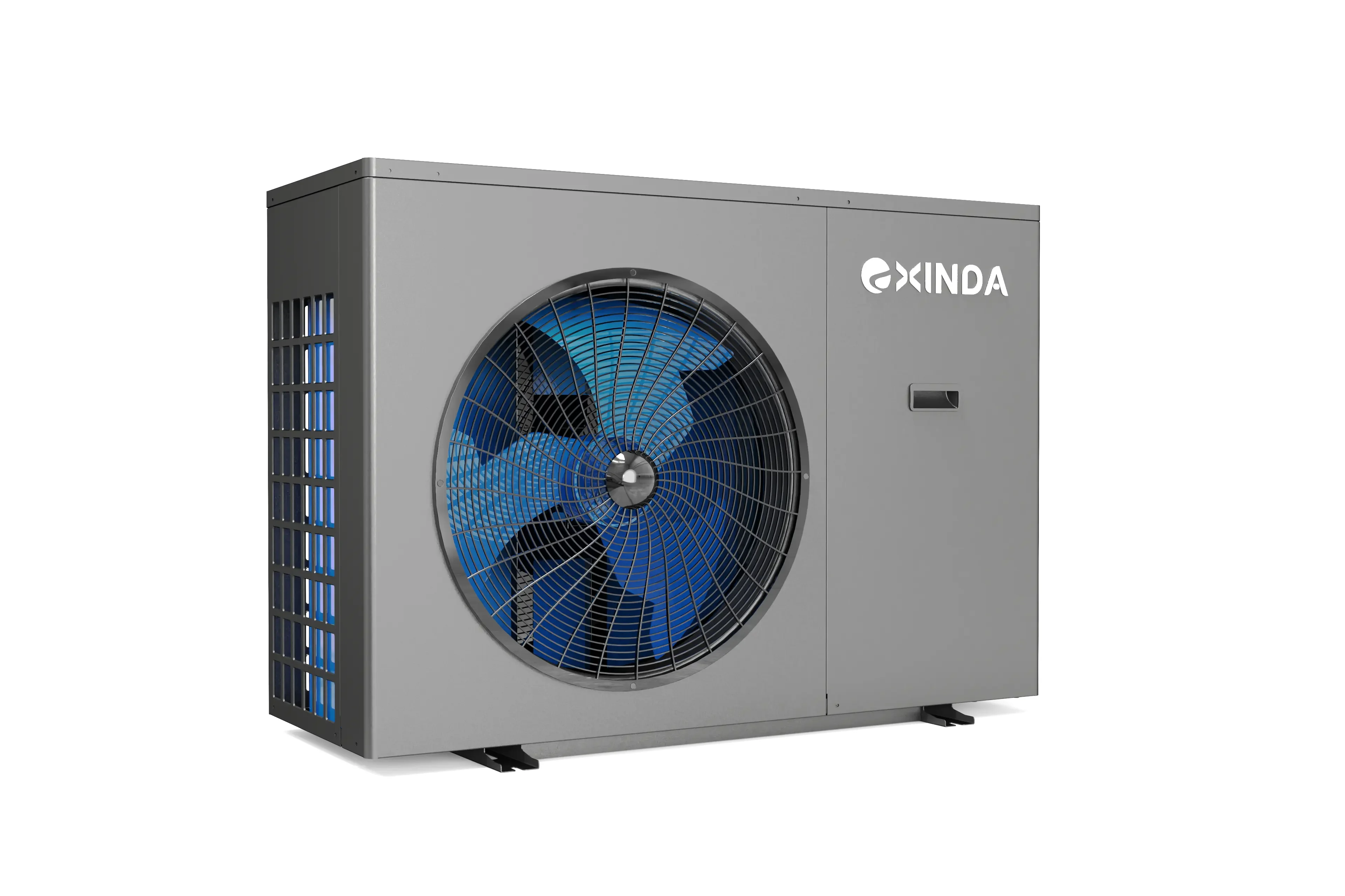
The Exinda 12 kW heat pump is the middle of the EXINDA residential range: an R290, DC inverter, monoblock unit for larger family homes.
For the full picture, read the CENTRO-GAS air-to-water heat pump buyer's guide first.
Who the 12 kW heat pump fits
The 12 kW heat pump fits larger family homes of typically 140 to 180 m² with decent insulation. The 9 kW unit covers typically 100 to 130 m² and the 15 kW unit typically 180 to 230 m². The final size is always confirmed per house.
Home and emitter situations
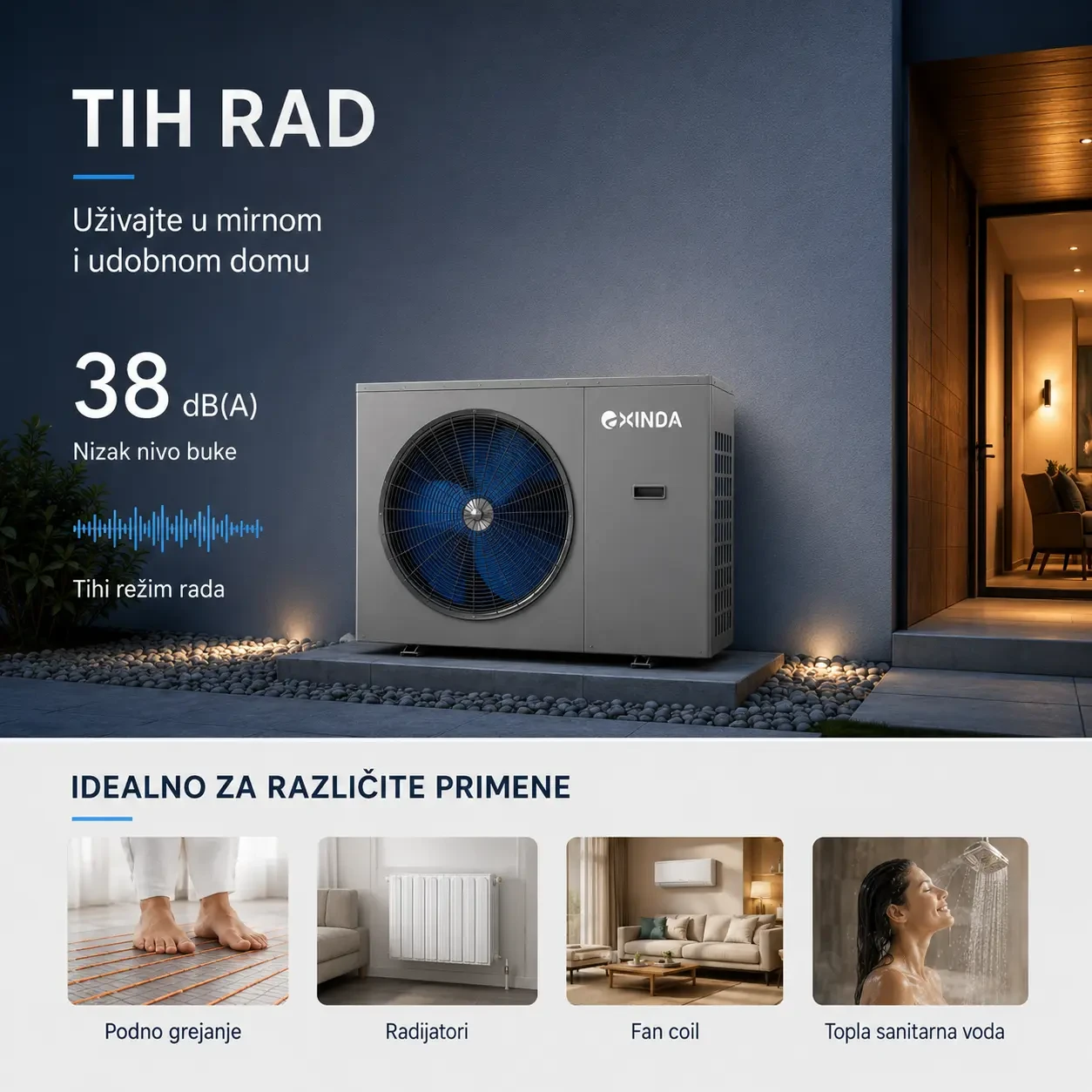
The unit works with three kinds of emitter, the parts that release heat in each room, and each setup can add a domestic hot water tank:
- A house with underfloor heating.
- A house with fan coils.
- A house with good radiators.
All Exinda residential units share R290 refrigerant (propane), DC inverter compressors (which adjust speed to the heat needed) and a monoblock design (all refrigerant parts in one outdoor unit). The 12 kW model therefore matches the 9 kW and 15 kW units on those three attributes.
Choose the 12 kW if
The 12 kW size is a sound starting point when all three points apply:
- The house measures typically 140 to 180 m².
- The insulation is decent.
- The emitters are underfloor heating, fan coils or good radiators.
Look at a different size if
Another size deserves a look when one of these points applies:
- The house measures typically 100 to 130 m², which points to the 9 kW unit.
- The house measures typically 180 to 230 m², or sits near 180 m² with poor insulation, which may point to the 15 kW unit.
- Your location has unusually harsh winters, so the consultation checks whether the size should change.
Fit at a glance
Compare the three residential heat pumps by typical home size and use.
| Product | Typical home size | Typical use |
|---|---|---|
| Exinda 9 kW R290 full DC inverter | 100 to 130 m² | Mid-sized homes |
| Exinda 12 kW | 140 to 180 m² | Larger homes |
| Exinda 15 kW R290 DC inverter | 180 to 230 m² | Large homes and small commercial spaces |
What sizing depends on
Sizing depends on four factors: floor area, insulation, climate and the emitter system. No kW-per-m² rule replaces a look at the house, so two homes of the same area can need different capacity. Floor area is only the starting point, and CENTRO-GAS provides a sizing consultation for exactly this reason. You can estimate the capacity for your home in the CENTRO-GAS calculator, and the consultation confirms or adjusts it.
The four factors
Each factor changes the answer in its own way:
- Area sets the starting point, because a larger floor needs more heat.
- Insulation decides how much heat the house loses, so it changes the capacity needed for the same area.
- Climate decides how cold the coldest days get and how hard the unit must work.
- The emitter system, such as underfloor heating, fan coils or radiators, decides how the heat reaches each room.
The heat pump sizing guide covers each factor in more depth and helps you prepare for a consultation.
Two 150 m² homes, two different answers
Take two houses of 150 m². The first has good insulation and underfloor heating, so a 12 kW unit sits inside its typical range.
The second loses heat through poor insulation and relies on older radiators, so it may need a larger unit, insulation work or radiator adjustments first. The floor area is identical, yet the answer differs, which is why CENTRO-GAS sizes each house instead of selling by area.
What the unit is
The Exinda 12 kW heat pump is an R290, DC inverter, monoblock unit. A heat pump heats without burning fuel, as the US Department of Energy explains. The heating water receives both the heat taken from the outdoor air and the energy the compressor uses. CENTRO-GAS puts the result at roughly 3 to 4 times more heat energy than the electricity consumed, which supports significantly lower heating bills.
R290 refrigerant
R290 is propane, a low-GWP refrigerant with high seasonal efficiency. Heat pump maker Hoval gives propane a GWP value of 3.
GWP means global warming potential, a comparison with carbon dioxide, which has a GWP of 1 by definition according to the EPA. Read more about R290 heat pumps.
DC inverter
A DC inverter compressor changes its speed to match the heat the house needs. COP, the coefficient of performance, compares heat output with electricity input at one moment.
SCOP, the seasonal version, is calculated from tests across a range of temperatures to estimate annual performance, as BRE describes.
Monoblock design
A monoblock heat pump keeps all refrigerant parts in one outdoor unit. Water lines then connect that unit to underfloor heating, fan coils or radiators and to a domestic hot water tank.
EXINDA factory proof
EXINDA reports 100% in-line quality control and climate testing from minus 35 °C to 60 °C. It lists CE, ErP, Keymark and MCS marks and an EU service and engineering center in Italy. The Heat Pump KEYMARK is a voluntary European mark based on independent third-party testing.
EXINDA also cites a fully electric luxury villa in Italy, over 700 m², running on three 20 kW R290 units. That is an EXINDA reference, not a CENTRO-GAS installation.
Promotional container pricing explained
The 9 kW, 12 kW and 15 kW units carry promotional pricing while the first container is in stock. This article states no amounts, because the offer follows current stock and the written quote for your house holds the figures. Fit comes first and price second.
What the promotion means
The promotion applies while the first container is in stock, so compare the current offer with other quotes line by line. Pick the size by fit first, because the promotion should never decide the capacity.
What a quote should itemise
A fair heat pump quote in Serbia lists six separate lines:
- Unit
- Installation
- Buffer tank
- Pump group
- Commissioning
- Service
Buffer tanks (which hold heated water) and pump groups (which circulate it) belong to the hydraulic accessories that CENTRO-GAS supplies alongside the unit. Hiding installation, accessories and commissioning behind a unit price makes offers hard to compare.
Total cost matters more than sticker price
A heat pump is a system, so installation, commissioning and service shape the outcome as much as the unit does. The CENTRO-GAS offer covers the whole project, including service contracts, not just the unit. Efficiency belongs in the comparison too, because CENTRO-GAS puts a heat pump's output at roughly 3 to 4 times the electricity it consumes.
What comes with the project
A CENTRO-GAS heat pump project is a complete heating project, not a box. EXINDA supplies the unit, and CENTRO-GAS sizes, installs and services it.
Global brands such as Daikin, Bosch, Mitsubishi and LG bring brand recognition and dealer networks. CENTRO-GAS brings a local technical team with years of industrial heating experience from work on industrial burners and heat systems.
Five project elements
- Sizing consultation: CENTRO-GAS checks area, insulation, climate and emitters before recommending a size.
- Installation by the CENTRO-GAS technical team or trained local partners.
- Commissioning of the installed system.
- Maintenance contract for ongoing service.
- Subsidy paperwork help, prepared together with the customer.
Together these five elements give the customer one accountable partner from the first question to long-term service. A local team in Novi Sad answers the phone and stands behind the work. A unit bought from a web shop alone may come without installation, service or local warranty support.
Subsidy help
Subsidies for energy-efficient heating can cover a significant share of the cost. CENTRO-GAS helps confirm current program terms and prepare the application, and terms are confirmed at application time. Programs change, so confirm current terms before relying on any subsidy.
The Ministry of Mining and Energy of Serbia has published a public call for household energy efficiency that included heat pump installation. No amount or approval is promised. The promise CENTRO-GAS can make is its qualification: it works hard to be on the current lists of companies whose sold products are eligible for a subsidy, if funds are available at the time of the application.
Limits and who should choose another size
The 12 kW unit has real limits. Older radiators, poor insulation and extreme cold can each change the answer, and another size or setup may fit better. Heat pumps are not magic, so a sizing consultation checks each of these in your house.
Honest limits
- Radiators work with a heat pump, and some older ones need adjustment. Heat pump maker alpha innotec says existing radiators can stay in most cases, but not every radiator works effectively, so each home needs a check.
- Poorly insulated homes may need a larger unit or insulation work first, because heat loss raises the capacity needed.
- Extreme cold is planned for. EXINDA tests units from minus 35 °C to 60 °C, and the coldest hours of the year are covered by an electric heater in the buffer (storage) tank. For a critical building, one EXINDA reference in Quebec, Canada, keeps gas boiler backup alongside the heat pump.
Who should choose another size
Homes of typically 100 to 130 m² point to the 9 kW unit. Homes of typically 180 to 230 m² point to the 15 kW unit, and poorly insulated larger homes may need that extra capacity too.
Frequently asked questions
01Which houses suit a 12 kW heat pump?
Larger family houses with decent insulation suit a 12 kW heat pump, typically homes of 140 to 180 m² heated by underfloor heating, fan coils or radiators. Poor insulation or an older radiator system can change the answer. CENTRO-GAS confirms the fit in a sizing consultation, so the decision rests on the specific house and not on floor area alone.
02What size house can a 12 kW heat pump heat?
The Exinda 12 kW R290 heat pump typically heats homes of 140 to 180 m². The 9 kW unit typically covers 100 to 130 m² and the 15 kW unit typically 180 to 230 m². A well-insulated 150 m² house sits inside the 12 kW range, while insulation, climate and emitters can move the answer for other houses. The CENTRO-GAS calculator gives a first estimate for your own house.
03What does promotional container pricing mean?
It means the 9 kW, 12 kW and 15 kW units carry promotional pricing while the first container is in stock. The offer follows current stock of that container. A quote should still itemise unit, installation, buffer tank, pump group, commissioning and service, so that two offers compare fairly line by line.
04What does a 12 kW heat pump project include besides the unit?
A CENTRO-GAS project adds a sizing consultation, installation by the CENTRO-GAS technical team or trained partners, commissioning, a maintenance contract and help with subsidy paperwork. EXINDA supplies the unit, and CENTRO-GAS sizes, installs and services it with a local technical team. Subsidy terms are confirmed at application time, and no amount or approval is promised, though CENTRO-GAS works hard to be on the current lists of companies whose sold products are eligible for a subsidy, if funds are available at the time of the application.
05Can a 12 kW R290 heat pump work with underfloor heating and radiators?
Yes, all Exinda residential units are compatible with underfloor heating, fan coils, radiators and domestic hot water tanks. Radiators need a closer look, because older ones may need adjustments before they heat a house well. A sizing consultation checks the emitters in your house and confirms whether the 12 kW size fits.
Key terminology
- SCOP
- SCOP stands for seasonal coefficient of performance. It is calculated from test results across a range of temperatures to estimate annual performance, according to BRE. It gives a fairer yearly picture than a single COP reading.
- COP
- COP stands for coefficient of performance. It compares heat output with electricity input at one moment, so it reflects the temperatures at that moment. For that reason COP alone says little about a full year.
- GWP
- GWP stands for global warming potential. It compares the energy a ton of a gas absorbs over a given period with a ton of carbon dioxide, as the EPA explains. Carbon dioxide is the reference, so its GWP is 1.
- R290
- R290 is propane used as a refrigerant, the working fluid that circulates in the unit's closed loop. Hoval describes it as a hydrocarbon known as the natural refrigerant R290. It is the refrigerant across the Exinda residential range.
- Monoblock
- A monoblock heat pump keeps all refrigerant parts in one outdoor unit and connects to the house by water pipes. Every Exinda residential unit uses this design. The monoblock heat pump guide explains it in more detail.
To confirm whether 12 kW fits your house, contact CENTRO-GAS and request a sizing consultation, or call +381 63 371 419. For the unit itself, see the Exinda 12 kW page.