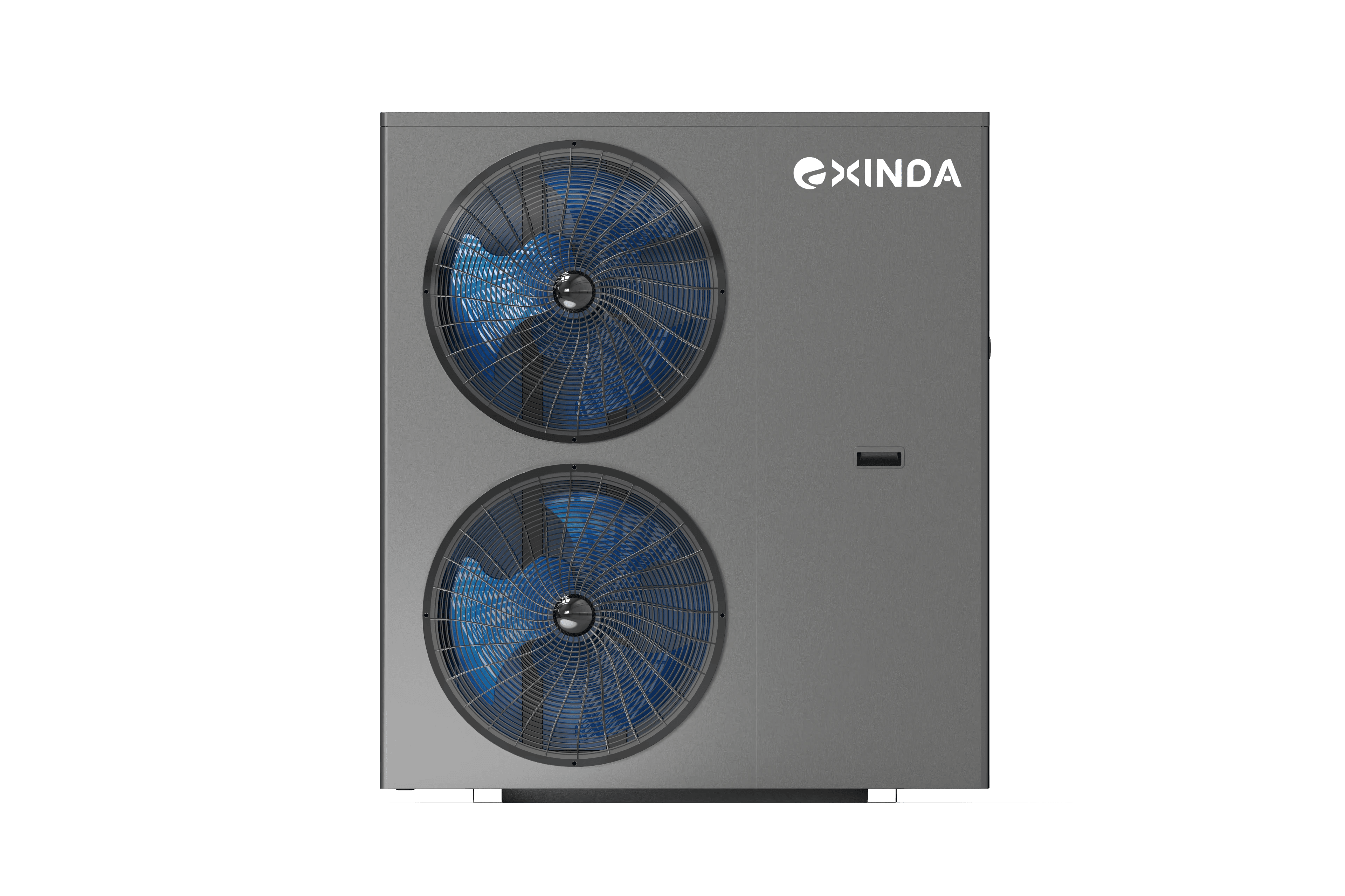
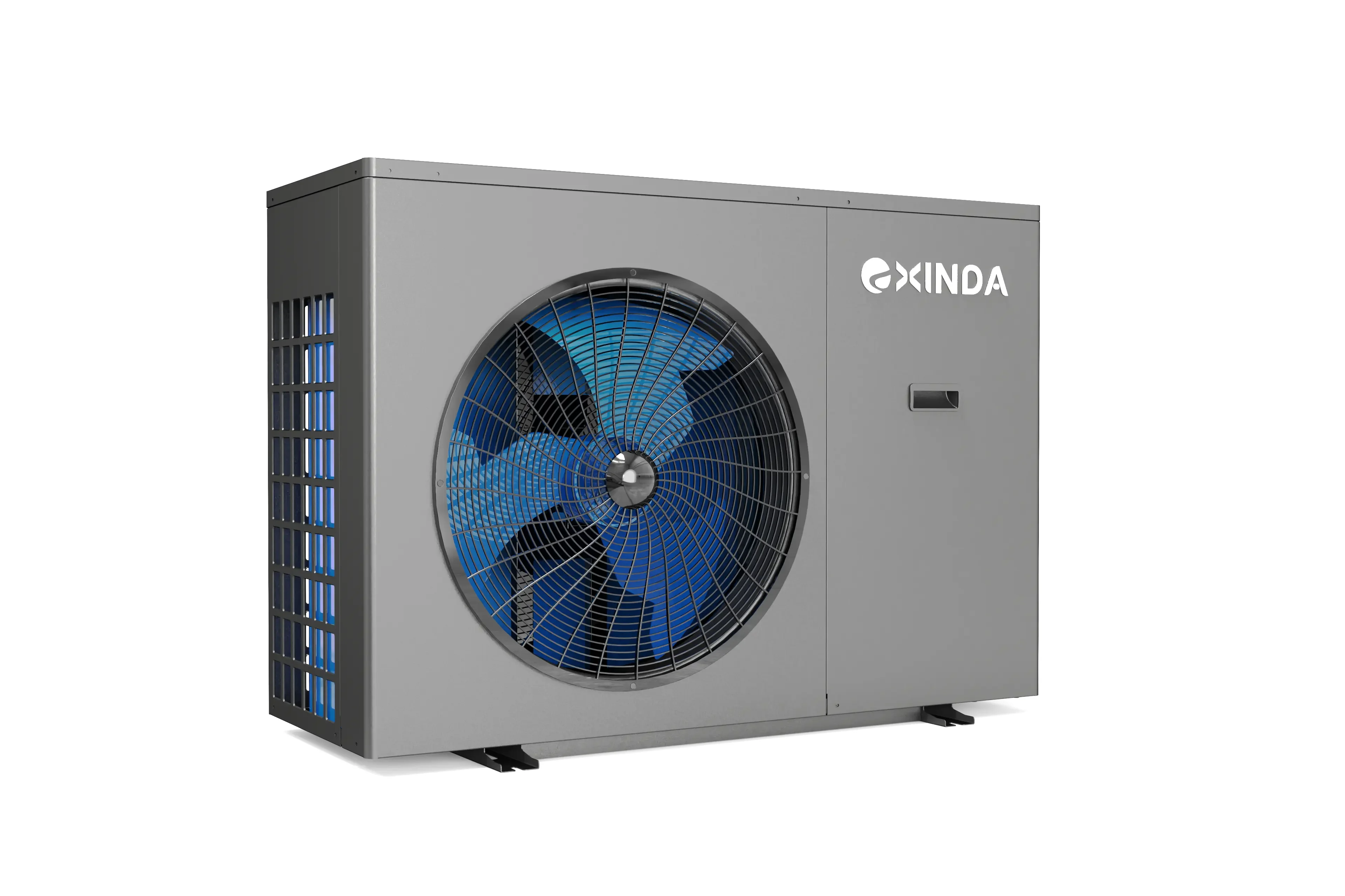
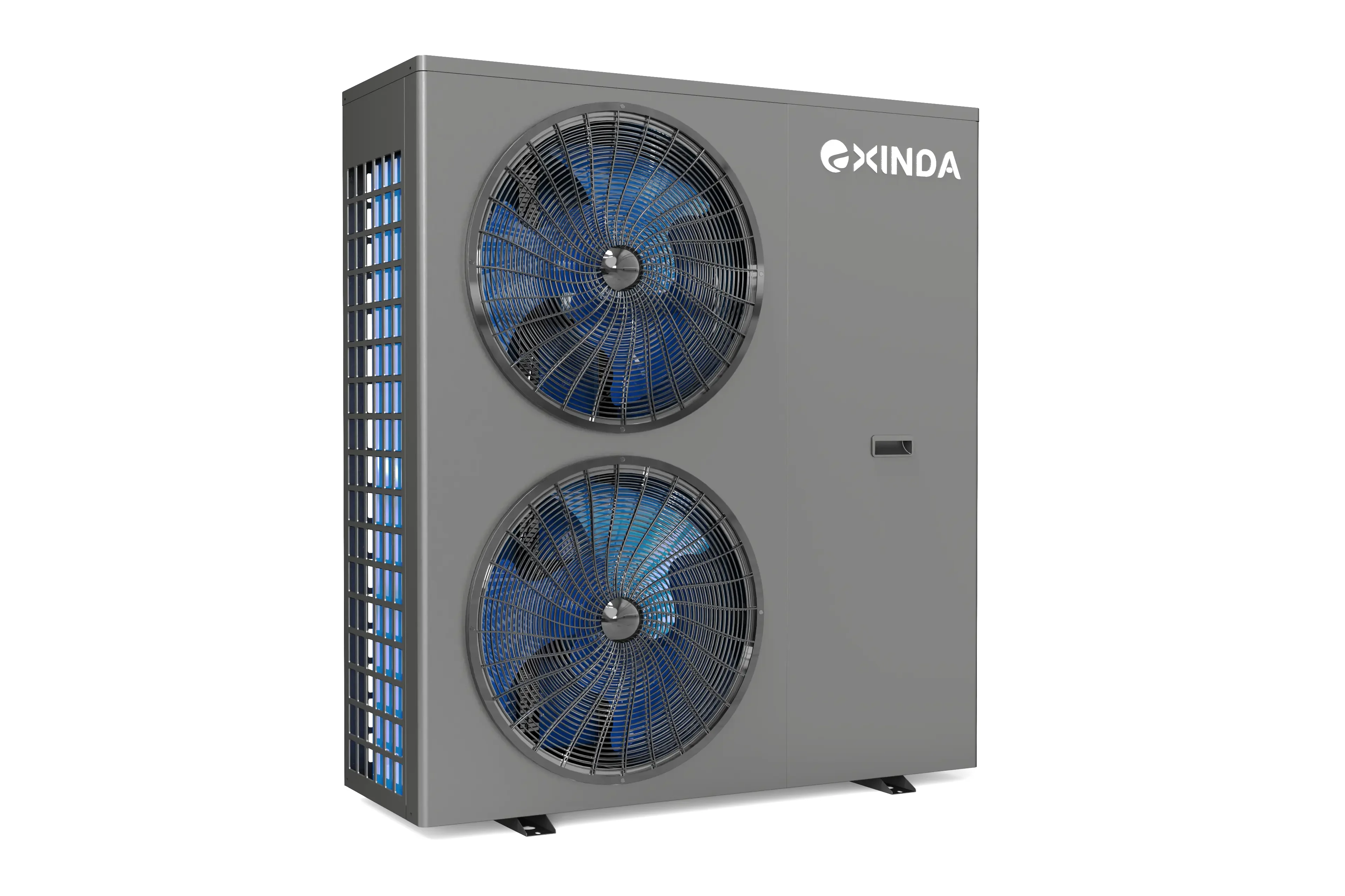
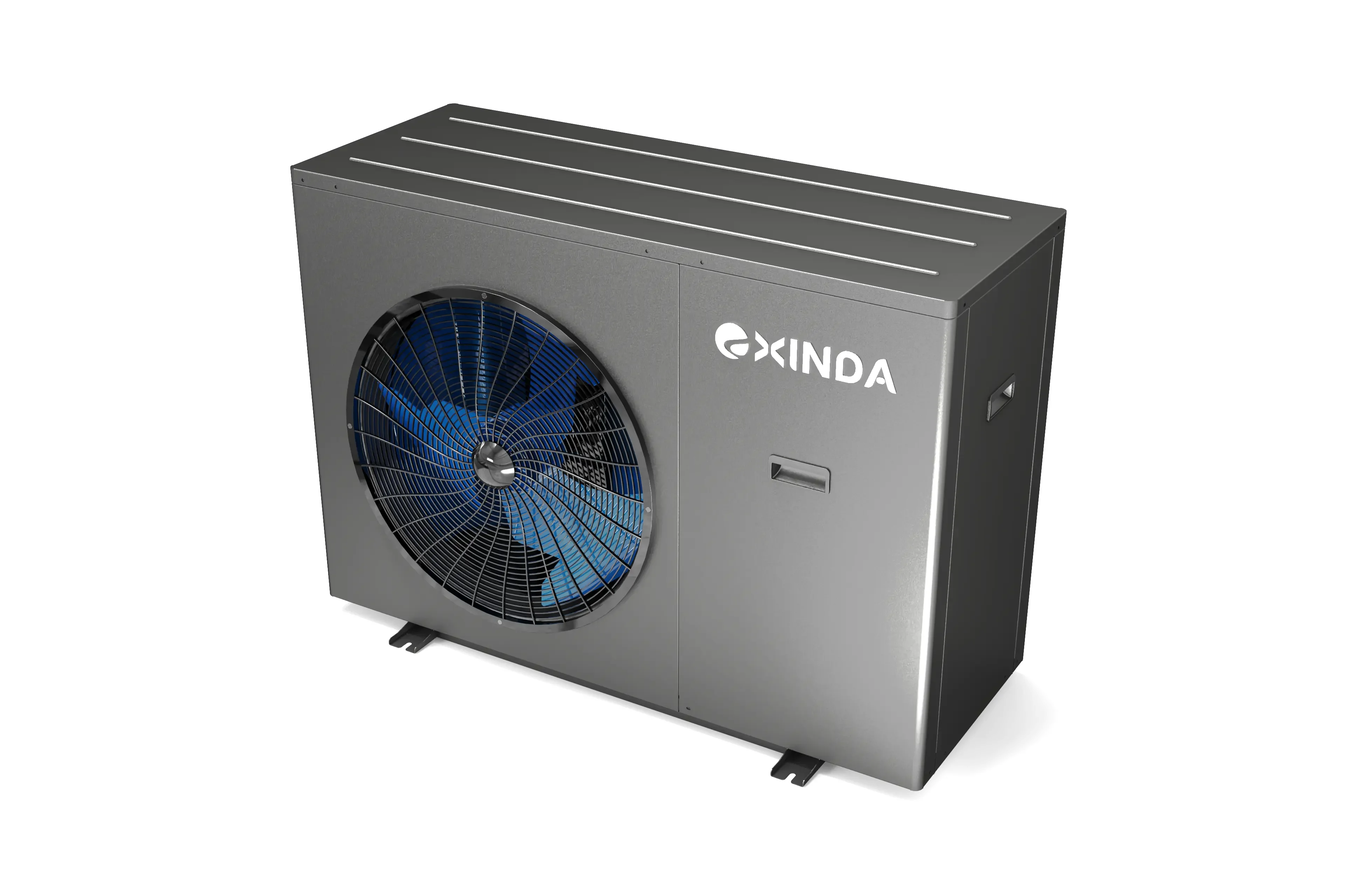
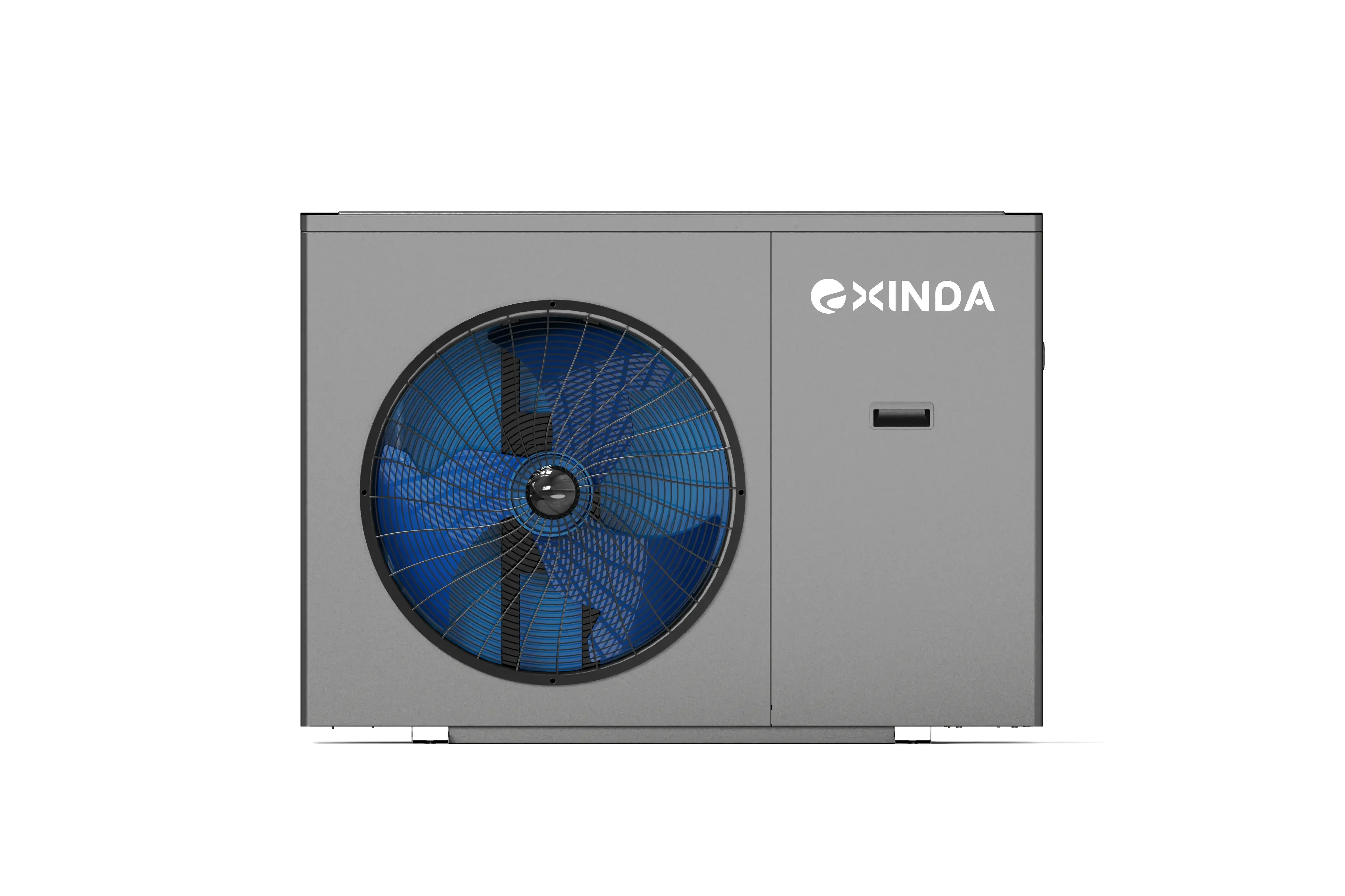
Exinda 15kW R290 DC Inverter Heat Pump
Key specifications
Product description
The Exinda 15kW R290 DC inverter heat pump is a monoblock air-to-water unit engineered for large homes, small commercial buildings and well-insulated villas in the 180 to 230 m² range, with R290 propane refrigerant (GWP=3) and an operating range from -25 °C to +43 °C. Despite its 15 kW capacity, the unit runs on standard single-phase 230 V supply, eliminating the cost of a three-phase electrical upgrade that competing units at this output level often require. The DC inverter compressor modulates output to match real demand, maintaining high efficiency through partial-load operation, which dominates real-world running hours across the European heating season. The 15kW monoblock combines space heating, cooling and domestic hot water production, compatible with radiators, underfloor heating and fan coils. This model is currently offered at a promotional price while the first container is in stock. CENTRO-GAS, a Novi Sad industrial heating company, provides sizing consultation, installation, commissioning and maintenance contracts for every unit sold.
More about this model
Why R290 as a refrigerant?
How does it perform at very low outdoor temperatures?
What does DC inverter mean at 15 kW capacity?
Ideal buyer profile for the 15 kW unit
Technical specifications
| Heating | |
|---|---|
| Nominal heating capacity (A7/W35) | 15.0 kW |
| Heating capacity (A2/W35) | 14.3 kW |
| Heating capacity (A-7/W35) | 11.2 kW |
| COP (A7/W35) | 3.89 - 5.03 |
| SCOP at 35 °C | 5.11 |
| SCOP at 55 °C | 3.71 |
| Energy class (35 °C) | A+++ |
| Energy class (55 °C) | A++ |
| Maximum flow temperature | 60 °C |
| Cooling | |
| Cooling capacity (A35/W7) | 10.0 kW |
| EER (A35/W7) | 2.75 - 3.08 |
| SEER | 4.79 |
| Energy class, cooling | A++ |
| Domestic hot water | |
| Max. DHW temperature | 60 °C |
| Compatible tank size | 200-500 L |
| Refrigerant | |
| Refrigerant type | R290 (propane) |
| Refrigerant charge | 1.1 kg |
| GWP | 3 |
| Electrical | |
| Power supply | 380 - 415 V / 3ph / 50 Hz |
| Nominal power input | 1.1 - 4.0 kW |
| Max. input current (per phase) | 14 A (MCA) |
| Recommended circuit breaker | 35 A (MOP) |
| Operating range | |
| Outdoor temperature, heating | -25 °C to +35 °C |
| Outdoor temperature, DHW | -25 °C to +43 °C |
| Outdoor temperature, cooling | -15 °C to +43 °C |
| Dimensions and weight | |
| Outdoor unit dimensions (H x W x D) | 1420 x 1252 x 550 mm |
| Weight | 112 kg |
| Hydraulic connections | G 1" |
| Noise | |
| Sound power level Lw(A) | 61 dB(A) |
| Sound pressure level at 1 m | 59 dB(A) |
| Night / quiet mode | 38 dB(A) |
| Controls | |
| WiFi / app | Yes, iOS and Android |
| Modbus protocol | Standard |
| External sensors | Outdoor, room, tank |
| Dual-zone control | Supported |
| Identifiers and warranty | |
| Model code | XDASH15D3 |
| Warranty, unit | 10 years |
| Warranty, compressor | 10 years |
| Certificates | CE, ErP A+++, EN14511 |
Documentation
How it works and what is needed for installation
Operating principle
The Exinda 15kW R290 heat pump absorbs thermal energy from outdoor air through a large-surface evaporator, even at temperatures well below zero. The DC inverter compressor raises the temperature of the R290 refrigerant, which then transfers heat to water through a plate heat exchanger inside the monoblock unit. The heated water circulates through the building's hydronic system (underfloor loops, radiators or fan coils). In cooling mode, the cycle reverses. All refrigerant piping is factory-sealed inside the outdoor unit, so the installer works only with water connections, not refrigerant lines. The DC inverter compressor modulates its output continuously, delivering only the power the building needs at any moment.
What is needed on site
- Outdoor unit placement: clearance for airflow, with at least 30 cm clearance behind, to the sides and above. For a 15 kW unit, consider airflow volume and distance from neighbouring properties for noise compliance.
- Electrical installation: 230 V single-phase, dedicated circuit, circuit breaker 35 A (MOP). Verify that the existing main breaker and wiring gauge support the nominal draw. No three-phase supply required.
- Hydraulic connection: G 1" flow and return, insulated, running to the indoor distribution point.
- Condensate drainage: gravity drain or condensate pump, with freeze protection in cold-exposed locations.
- DHW tank (if installed): separate indoor space, 200 to 500 L recommended for this capacity.
- Communication: Ethernet or WiFi to the indoor controller module.
Compatible heating systems
The 12 kW unit's maximum flow temperature of 75 °C means it can serve even older high-temperature radiator systems, though seasonal efficiency decreases at higher flow temperatures. The SCOP at 55 °C is 3.6 compared to 4.65 at 35 °C. This trade-off is worth discussing with the homeowner during the sizing consultation.
| System type | Recommended flow temperature | Compatible? |
|---|---|---|
| Underfloor heating | 30-40 °C | Ideal |
| Low-temperature radiators | 40-55 °C | Ideal |
| Standard radiators (older systems) | 55-65 °C | Compatible, requires assessment |
| High-temperature radiators (>70 °C) | 65-75 °C | Compatible at reduced SCOP |
| Fan coil units | 35-55 °C | Compatible |
| DHW tank | 50-65 °C | Ideal |
What is NOT included in delivery
- DHW tank (configured separately)
- Buffer tank
- Hydraulic kit and distribution manifold
- Electrical wiring to the outdoor unit
- Internal hydraulic connections within the building
- Installation labour (see Service network section)
Note for installers:
At 15 kW on single-phase 230 V, the nominal current draw is higher than for the 6 to 12 kW models. Verify the main distribution board capacity and cable gauge before installation. The DC inverter's soft-start limits inrush current, but sustained draw at full load in extreme cold must be accounted for in the electrical design.
Other models in the Residential range
Subsidies and financing for this model
Current subsidies for residential heat pumps
Serbian state subsidies for energy-efficient heating systems can cover a significant share of the investment cost. The programme operates through the Ministry of Mining and Energy at the national level, while local municipalities (including Novi Sad, Belgrade, Nis and Kragujevac) run additional programmes with their own terms. Green credit lines through EBRD and GEFF may also apply. Exact amounts, eligibility criteria and application windows change annually, so CENTRO-GAS verifies the current terms at the time of your enquiry and helps prepare the documentation.
Learn how to apply for a subsidy >Help with subsidy applications
CENTRO-GAS prepares the subsidy documentation together with the customer. The service covers eligibility checks, required technical specifications, application forms and follow-up with the relevant authority. This is part of the full-service approach, not an extra.
Schedule a consultation >Frequently asked questions about this model
How large a house can a 15 kW heat pump handle?
The 15 kW unit is sized for large homes and villas of 180 to 230 m² depending on insulation quality. A well-insulated newer villa of up to 230 m² with underfloor heating is an ideal match. A moderately insulated older house of 180 to 200 m² with radiators is also suitable. For a 200m2 heat pump request with average Serbian insulation, the 15 kW is the natural choice. Above 230 m², consider the 20 kW three-phase model. CENTRO-GAS provides a free sizing consultation to confirm.
Can it also heat a small commercial building?
Yes. Guest houses, small hotels, clinics, small offices and restaurants in the same area range (180 to 230 m²) are within scope. The unit provides heating, cooling and domestic hot water from a single system. For larger commercial projects, CENTRO-GAS offers the 12-ton and 24-ton commercial heat pump chillers.
Is R290 propane safe at 15 kW capacity?
The R290 charge is factory-sealed inside the outdoor monoblock. The refrigerant never enters the building. Even at 15 kW, the R290 charge quantity remains within safety standards for outdoor residential and light commercial equipment. The unit carries CE and ErP certification. R290 is a natural refrigerant already used in millions of household refrigerators worldwide.
What is the difference between this 15 kW and the 12 kW or 20 kW?
The 12 kW covers homes of 140 to 180 m², the 15 kW handles 180 to 230 m², and the 20 kW serves 230 to 300 m². The 12 kW and 15 kW both run on single-phase 230 V supply. The 20 kW requires three-phase 380 V. All three models (12 kW, 15 kW and 20 kW) are currently at promotional pricing while the first container is in stock.
Do I need three-phase power for 15 kW?
No. This is one of the distinguishing features of the 15 kW model: it operates on standard single-phase 230 V supply with a dedicated circuit and a 35 A breaker. Many buyers searching for a three phase heat pump 15kw are surprised to learn that this unit does not require a three-phase upgrade, which saves significant electrical installation cost. The 20 kW model is the first in the range that requires three-phase 380 V.
What will my electricity bill be for heating a 200 m² house?
The answer depends on electricity tariff, insulation level, climate zone and heating habits. Heat pumps deliver roughly 3 to 4 times more heat energy than the electricity they consume. For a 200 m² moderately insulated house, this translates to significantly lower heating costs compared to gas or electric heating. CENTRO-GAS provides a running-cost estimate during the sizing consultation based on actual building data.
Does it work at -20 °C? Do I need a backup heat source?
EXINDA certifies operation down to -25 °C outdoor temperature. At very low temperatures, capacity reduces but the unit continues to produce heat. The 15 kW nominal capacity provides more headroom than smaller models, meaning the system can maintain comfort deeper into extreme cold before output becomes marginal. For critical applications, a hybrid setup with a backup boiler is a practical option that CENTRO-GAS can engineer.
How noisy is it? It is larger than the 12 kW, is it louder?
Sound power is 61 dB(A) at nominal load. In practice, the DC inverter compressor and fan run at reduced speed for most of the heating season (the unit operates well below 15 kW most of the time), which keeps noise below the nominal figure during typical operation. Night mode reduces output further. CENTRO-GAS recommends minimum 3 metres from bedroom windows and considers noise regulations during installation planning.
Can I combine it with solar panels?
Yes. The unit integrates with photovoltaic systems. At 15 kW capacity, the heat pump can absorb a significant share of a residential or small commercial solar array's output, storing surplus energy as hot water. This is particularly effective for guest houses and small hotels where daytime solar production aligns with hot water demand.
What maintenance does it need?
Annual inspection is recommended: refrigerant pressure check, filter and evaporator coil cleaning, control settings verification, and hydraulic connection inspection. CENTRO-GAS offers maintenance contracts including an annual service visit, priority support and discounted spare parts. For small commercial installations, more frequent inspection schedules can be arranged.