Phone icon+381 21 518 887

Residential air-to-water heat pumps (R290)

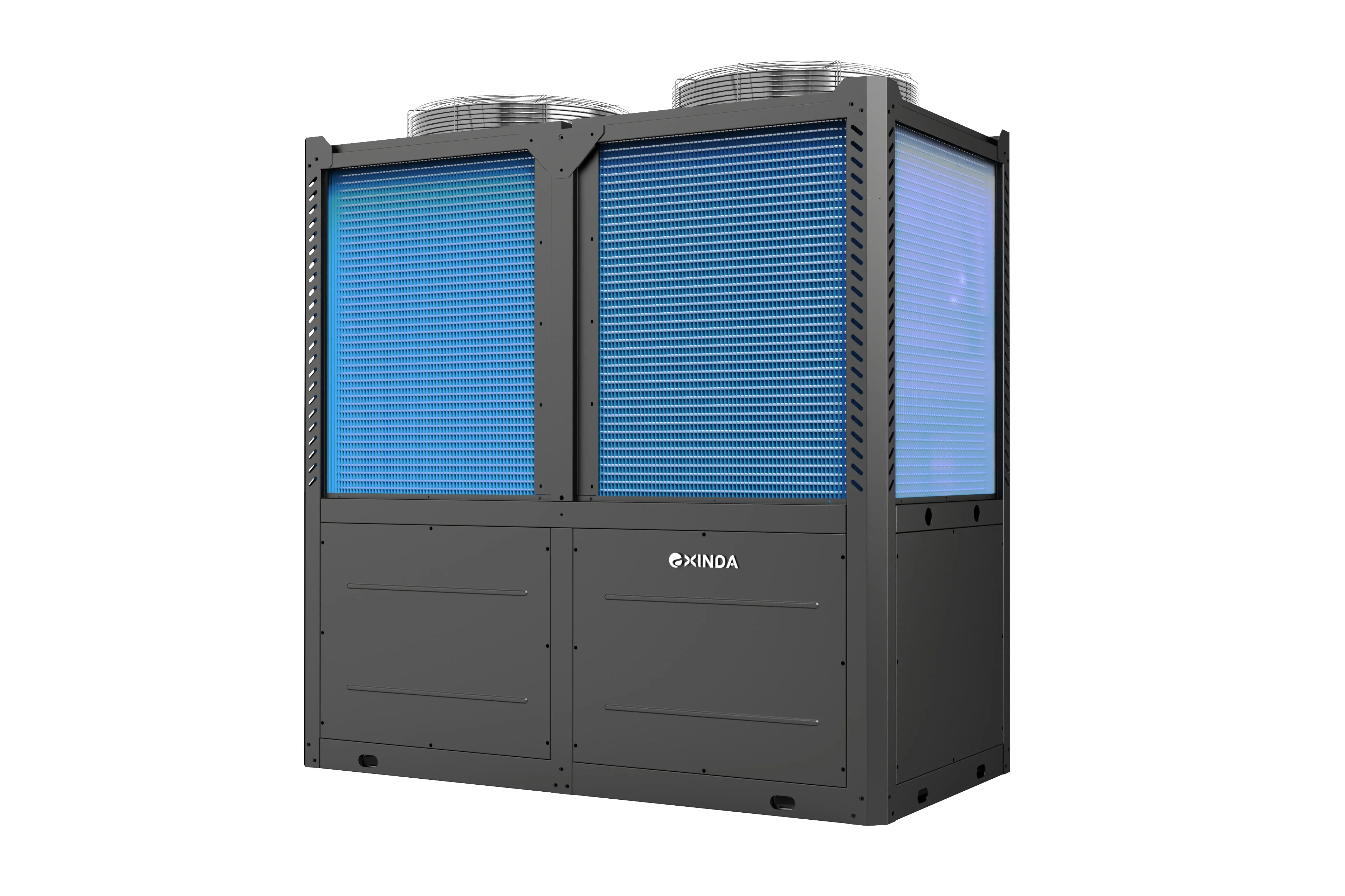
A residential air-to-water heat pump is a heating system that extracts thermal energy from outdoor air to heat a home, provide cooling and produce domestic hot water, delivering roughly 3 to 4 times more heat energy than the electricity it consumes. The Centro-Gas range includes Exinda R290 (propane) monoblock units from 6 kW to 20 kW, designed for homes from approximately 60 m² to 300 m², depending on insulation and climate zone. All units feature DC inverter compressors and are compatible with underfloor heating, radiators and hot water tanks.

Compare all models in the category

Specification6 kW9 kW12 kW15 kW20 kW
Heating capacity (A7/W35)6.0 kW9.2 kW12.0 kW15.5 kW20.4 kW
SCOP (35 °C)5.14.94.74.74.5
SCOP (55 °C)3.83.73.63.53.4
Energy class (35 °C)A+++A+++A+++A+++A+++
RefrigerantR290R290R290R290R290
Power supply230 V / 1ph230 V / 1ph230 V / 1ph230 V / 1ph380 V / 3ph
Max. flow water75 °C75 °C75 °C75 °C75 °C
Operating range (heating)-25 / +43 °C-25 / +43 °C-25 / +43 °C-25 / +43 °C-25 / +43 °C
Noise (5 m, dB(A))3335363841
Recommended home areaup to 80 m²100 to 130 m²140 to 180 m²180 to 230 m²230 to 300 m²
AvailabilityIn stockIn stockIn stockIn stockIn stock
Details >Details >Details >Details >Details >

Guide: how to choose a residential air-to-water heat pump

How to determine the required power according to the size of the house?

The power of a residential heat pump depends on three factors: the area of the house, the quality of insulation and the type of heating system. As a guideline, new construction with good insulation typically requires 60 to 80 W per square meter, a house with average insulation 80 to 120 W/m², and a poorly insulated older building can require up to 150 W/m². In practice, this means that a new house of 120 m² with good insulation can work with a 9 kW unit, while the same area in an older house with average insulation can require 12 kW or more. For larger houses above 200 m², 15 kW or 20 kW units come into consideration. Centro-Gas provides a professional sizing assessment before each installation, as no honest capacity recommendation can be given without knowing the specific house. That assessment is the correct first step, not guessing from a table.

Monoblock or split. What to choose?

Air-to-water heat pumps exist in two designs. A split system places the compressor outside and the hydraulic module inside, connected by pipes with refrigerant that must be joined on site by a technician with an F-gas certificate. A monoblock system contains all components of the refrigerant circuit in the outdoor unit and connects to the indoor heating circuit only with water pipes. The Centro-Gas range exclusively uses a monoblock design. The advantages are simpler installation (water pipes instead of refrigerant pipes), no need for an F-gas certificate when connecting, and the fact that the R290 charge remains sealed in the factory-tested outdoor unit. For homeowners, that means a faster installation day and one less possible point of failure. For technicians from related trades (plumbing, electrical), monoblock units are more accessible because on-site work includes water connections they already deal with.

R290 or R32. Which refrigerant to choose in 2026?

The two most common refrigerants in residential heat pumps today are R290 (propane) and R32. The key difference is the impact on the environment, which is measured by the GWP value (global warming potential). R290 has a GWP of only 3, which means almost zero impact on the climate in case of leakage. R32 has a GWP of 675, and the older R410A (which is still found in many systems) has a GWP of 2,088. European F-gas regulations are gradually restricting refrigerants with high GWP, which makes R290 a choice with a greater future. Besides the ecological argument, R290 has a higher critical temperature (96.7 °C) than R32, which allows R290 heat pumps a water flow temperature of up to 75 °C. This is important in Serbia because many houses have older radiator systems designed for higher water temperatures. A heat pump that can reach 75 °C is more compatible with those existing systems without the need to replace radiators. The entire Centro-Gas residential range uses R290. The units carry an A+++ energy class at 35 °C flow temperature and remain highly efficient at 55 °C, which is the temperature at which most radiator retrofits actually work.

Can I use a heat pump with existing radiators?

Yes, but compatibility depends on the type of radiator and the flow temperature your heating system requires. Modern low-temperature radiators (designed for flow water of 45 to 55 °C) work well with a heat pump and give high efficiency. Standard older radiators designed for 70 to 75 °C can also work, especially because Exinda R290 units can produce flow temperatures up to 75 °C, although efficiency at higher flow temperatures decreases compared to lower ones. Underfloor heating is an ideal pair because it works at low flow temperatures (30 to 40 °C), and that is precisely the range in which heat pumps achieve the highest SCOP values. Fan-coil units are also a good choice. In some houses, the best approach is a combination: underfloor heating on the ground floor with radiators on the upper floor, or oversized radiators that can work at lower flow temperatures. Centro-Gas assesses each house individually during a professional sizing assessment. If your radiators are too small for heat pump temperatures, the technician will tell you. An honest assessment before installation prevents problems after it.

How much does a heat pump pay off compared to a gas boiler in Serbia?

A gas boiler converts approximately 0.9 kW of heat from each 1 kW of gas energy. A heat pump with an SCOP value of 4.0 delivers 4 kW of heat from 1 kW of electricity. This means that for each unit of energy invested, the heat pump produces approximately four times more heat. Actual savings on the bill depend on local electricity and gas prices, the heat load of the house, the quality of insulation, and the design of the heating system. Since electricity and gas prices in Serbia change and differ by distributor, stating a specific percentage of savings would be unreliable. What physics guarantees is that a properly sized and installed system consumes significantly less energy for the same heating effect compared to a gas boiler. State subsidies for energy-efficient heating can cover a significant part of the investment, which further shortens the payback period. Centro-Gas helps customers check current program conditions and prepare applications. The total cost of ownership over 10 to 15 years of operation, taking into account lower energy consumption, less maintenance, and help with subsidies, is the real framework for this comparison, not the price of the device itself.

What subsidies are available for residential heat pumps in Serbia?

Serbia has state and municipal subsidy programs that support the energy-efficient replacement of heating systems in residential buildings. These programs typically cover part of the equipment and installation costs. They are announced on an annual basis with deadlines for application, and the conditions can change between cycles. In addition to national programs of the Ministry of Mining and Energy, many municipalities in Serbia announce their own local calls for subsidies. International financing programs (such as EBRD green credit lines) are also available through participating banks. Centro-Gas monitors active programs and helps customers with the preparation of documentation as part of the installation service. Since subsidy conditions, eligibility criteria, and coverage amounts change with each program cycle, stating specific figures risks being outdated at the moment you read this. A practical approach is to contact Centro-Gas for current program details. Navigating through subsidies is a key part of the service, not an incidental thing. For a complete overview of subsidy programs, visit the [Centro-Gas subsidies page](/en/subsidies/).

Quick reference: which kW power fits your house?

This table gives only orientation. Correct sizing depends on insulation, climate zone, ceiling height, window area and the type of heating system (underfloor heating, radiators, fan-coil). Centro-Gas provides a professional sizing assessment for each installation.

House area (m²)Insulation qualityRecommended power
Up to 80Good (new build)6 kW
80 to 100Good to average6 to 9 kW
100 to 130Good to average9 kW
100 to 130Average to poor9 to 12 kW
130 to 180Good to average12 kW
130 to 180Average to poor12 to 15 kW
180 to 230Good to average15 kW
180 to 230Poor15 to 20 kW
230 to 300Good to average20 kW
300+AnyMultiple units or commercial range

Frequently asked questions about residential heat pumps

01

What is the difference between an air-to-water and a water-to-water heat pump?

An air-to-water heat pump takes heat from the outside air and transfers it to the house's water heating circuit. A water-to-water (geothermal) system draws heat from groundwater or ground probes, which gives more stable source temperatures but requires drilling or digging. Air-to-water systems are simpler and more favorable for installation because they do not require ground works, only a suitable location for the outdoor unit.

02

Does a heat pump really work at minus 20 °C and lower temperatures?

Yes. Exinda R290 units in the Centro-Gas offer are designed to work down to minus 25 °C outdoor temperature. EXINDA tests its equipment in climate chambers that simulate conditions from minus 35 °C to 60 °C and has installations in cold climates in northern China and Scandinavia (EXINDA reference). In Serbia, where winter minimums rarely fall below minus 15 °C for long periods, these units work within their tested range. For objects where continuous heating is absolutely critical, a hybrid solution with a backup boiler is a legitimate option.

03

How noisy is a heat pump and can it be near a bedroom?

The noise level varies by model and capacity. A 6 kW unit measures 33 dB(A) at 5 meters, which is quieter than a whisper. Larger units range from 35 to 41 dB(A) at the same distance. Placement should follow local building regulations and take into account the distance to neighboring buildings. In practice, most homeowners find that the outdoor unit is no louder than a refrigerator when placed on an appropriate base at a reasonable distance from the window.

04

Do I need three-phase electricity for a heat pump?

Models of 6 kW, 9 kW, 12 kW and 15 kW work on a standard single-phase 230 V supply, which is normal domestic power in Serbia. Only the 20 kW model requires a three-phase 380 V supply. If your house does not have a three-phase connection and you need a capacity of 20 kW, an electrician can organize an upgrade of the connection through the local electricity distributor.

05

How long is the life of a heat pump?

A quality air-to-water heat pump with proper installation and regular maintenance is designed for a lifespan comparable to a well-maintained gas boiler. The inverter compressor, which modulates power instead of cyclically turning on and off, suffers less mechanical stress over time. Annual maintenance checks, which Centro-Gas offers through service contracts, help ensure long and reliable operation.

06

How much does installation cost and how long does it last?

The installation price depends on the specific house, the unit's capacity, the complexity of hydraulic integration and whether the existing heated infrastructure requires modifications. Centro-Gas offers three installation packages (Basic, Standard, Premium) that include the device, mounting, commissioning and service. A typical residential installation lasts one to two days for placing the outdoor unit and hydraulic connections. Contact Centro-Gas for an offer tailored to your project.

07

Is a special space needed for installing the outdoor unit?

The outdoor unit requires a stable, flat surface with sufficient airflow around it. Common installation places are a concrete slab at ground level, a wall bracket or a flat roof surface. It should not be placed in enclosed spaces that restrict air circulation. Centro-Gas technicians assess the installation location during the visit to the facility and advise on the best position taking into account noise, airflow and proximity to the internal hydraulic connection point.

08

What maintenance does a heat pump require?

Regular maintenance is less intensive than with a combustion boiler (no chimney cleaning, no gas safety checks). A typical annual service includes cleaning the air heat exchanger, checking refrigerant pressures, inspection of the water circuit and filters, verification of control settings and testing of safety functions. Centro-Gas offers maintenance contracts that cover these checks and provide a priority service response.

09

Can I combine a heat pump with solar panels?

Yes, and it is a strong combination. Solar panels produce electricity during the day, which can directly power the heat pump and reduce the amount of electricity from the grid. A heat pump with a buffer tank or a boiler for domestic water can also be programmed to work during peak solar production, effectively storing solar energy in the form of heat. This further reduces operational costs and increases the share of renewable energy in the household.

10

Can I use the existing boiler for domestic water with a heat pump?

It depends on the boiler. A heat pump produces lower flow temperatures than a gas boiler in most of its working range, so the boiler must have a sufficient coil surface for efficient heat transfer at those temperatures. Boilers designed for heat pump systems or solar thermal systems usually work well. Older boilers with a small coil may have to be replaced for optimal performance. Centro-Gas checks boiler compatibility during the professional sizing assessment and recommends replacement only when it is truly necessary.